
At 23:58:44 UTC on 25 October 2026, ten days after a police raid in Brno, someone swapped the code behind Betfin’s payout pool. Thirty-three seconds later the pool sent 34.99 billion BET, 4.5% of every BET token in existence, to a wallet that had never been used. Six seconds after that the old code was back. On 19 November Czech customs and police announced that 15 people are charged over Betfin, a crypto casino that was presented as decentralised and owned by nobody. Police have not commented on the sweep. I read the official release and the Czech reporting, and checked the sweep on the Polygon ledger myself. This is what each source shows, and what it means for anyone who plays at a casino that runs on smart contracts.
- The charges: 15 people, on suspicion of taking part in an organised criminal group and running games of chance without a licence. Three alleged organisers are in custody. Nobody has been convicted.
- The figure: investigators put the group’s unlawful gain at about CZK 267 million, roughly $12 million or £9.1 million. They did not describe it as money lost by players.
- The players: detectives analysed more than 2.3 million bets placed by about 28,500 players. Customs say a large share of the player accounts were created by programs.
- The licence: investigators say Betfin had no permit from the Czech Ministry of Finance. Its own documents describe a Marshall Islands company that leaves licensing to “independent third-party operators”.
- The sweep: on 25 October one admin wallet emptied the payout pool in 39 seconds. The published multisig and timelock held no admin role on that pool. BET fell 95% the next day.
- Today: betfin.io shows 0 BET locked. Its games site still lists roulette as active and shows 36.59 billion BET staked. The pool behind that figure holds 888 million. BET trades at about $0.0000012.
What customs and police announced on 19 November
The joint release came from the Brno officers of the customs Search and Supervision Section and the National Centre against Organised Crime, known in Czech as NCOZ. It says the two carried out a “large-scale operation” in October against organised crime linked to “the unauthorised operation of online games of chance through cryptocurrencies”. It names the BETFIN project and says the checks before the raids took more than a year.
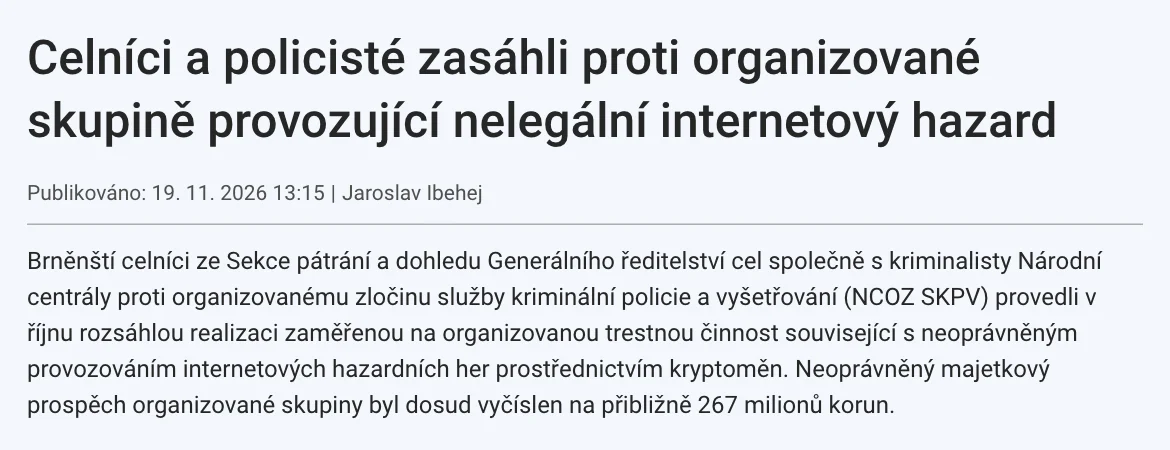
The core of the release is short. Officers detained 20 people and searched more than 40 homes and other premises. Detectives then opened a prosecution of 15 people. Three “main organisers” are held in custody. Almost 300 customs officers and police took part, with staff from Europol. Assets worth about CZK 100 million, roughly $4.5 million, were secured: property, vehicles, jewellery, cash and crypto. If a court convicts them, the main organisers face up to 13.5 years in prison.
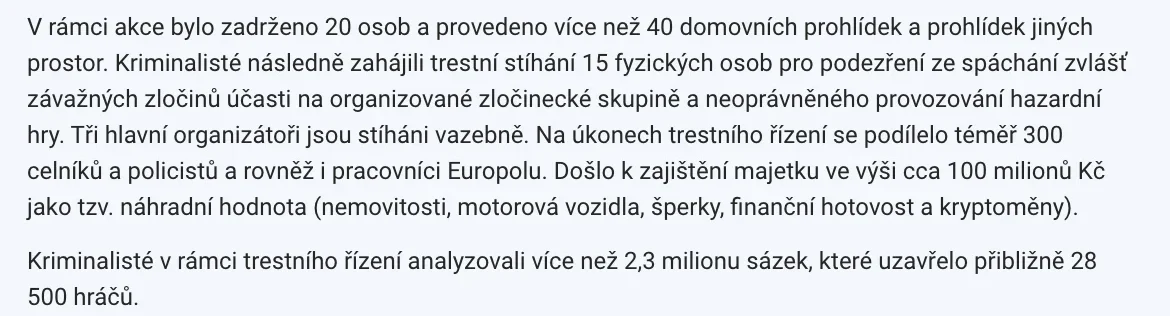
Two details matter for how you read the numbers. The CZK 267 million is the group’s “unlawful pecuniary benefit” as calculated so far. It is not a court finding and not a sum taken from players. At the press conference, Petr Danko, deputy head of NCOZ, said the injured party in the authorities’ view is the state, because the operators had a duty to seek a gambling licence. He said any harm to investors would depend on further investigation, according to ČTK.
The release also calls this the first case of its kind in the Czech Republic: a suspicion of illegal gambling built on “a decentralised online casino using blockchain infrastructure, smart contracts and its own cryptocurrency token”. An expert firm examined Betfin’s smart contracts on Polygon for the investigators.

Police have not named anyone. Czech media have named people around the project, but there is no public list of who is charged and who was only questioned. We do not name anyone here. A charge is not a conviction, and everyone charged is presumed innocent.
This is the second police action against a crypto casino we have covered this autumn. In Thailand, police searched 11 locations on 5 November in the Shuffle case.
How Betfin worked, in its own words and in the investigators’
Betfin ran on Polygon with its own token, BET. Michal Šimůnek, who heads the customs Search and Supervision Section, told the press conference there were two ways in. You could buy BET and play games such as roulette or a wheel of fortune. Or you could buy BET as an “investor” and become a co-owner of what was presented as a decentralised casino. Šimůnek said the project was presented as belonging to nobody, while the group in fact ran it centrally.
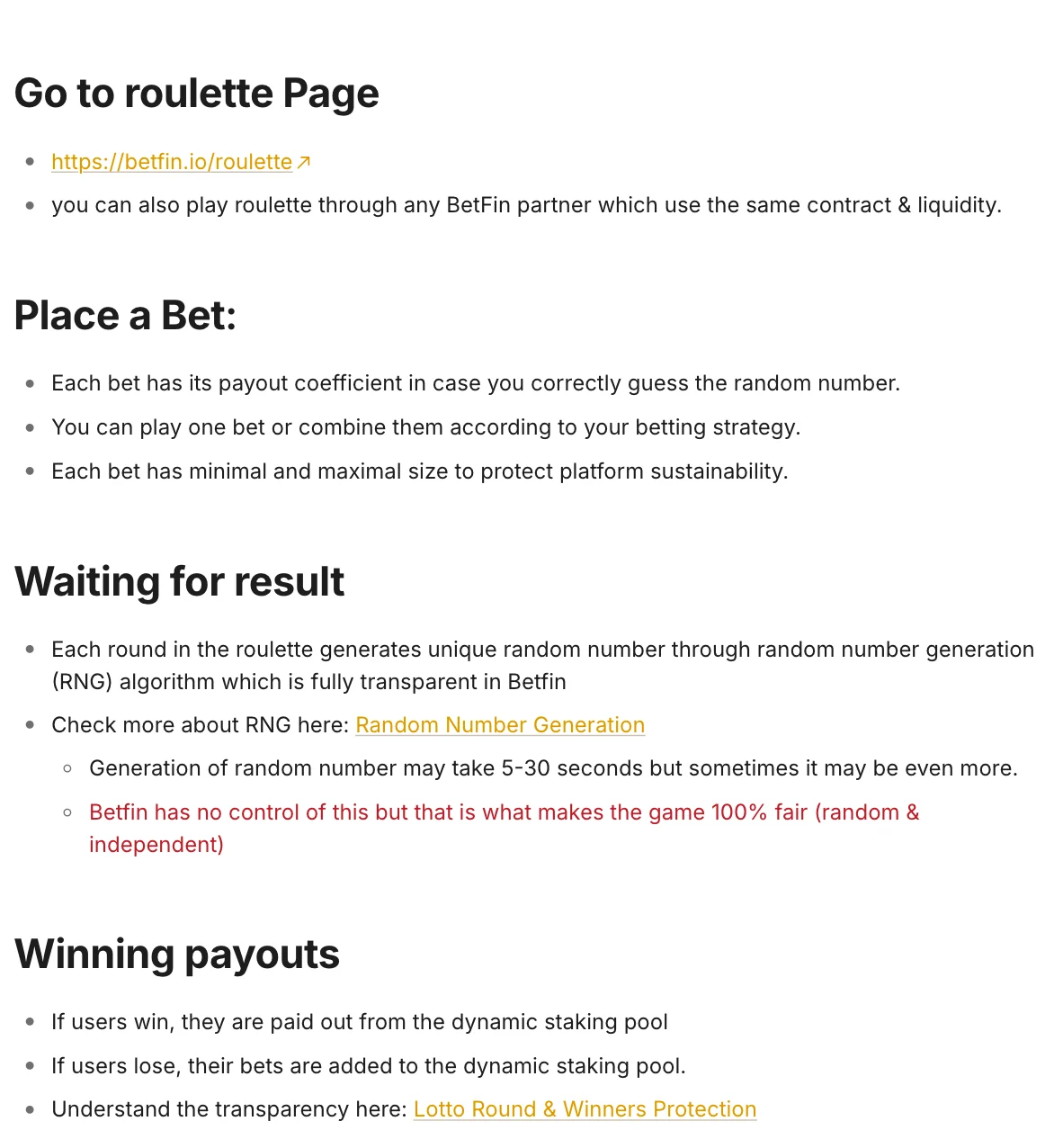
The games sat on a separate site, dexgames.io, which Betfin’s documents describe as its games front end. The list covers roulette, a crypto price prediction game, Lucky Round, Stones, Lotto and bets on events. The roulette guide sends players to betfin.io/roulette. That address now returns “Not Found”. The same guide explains where the money went: winners are paid from a staking pool, and losing bets are added to it. The stakers’ money was the casino’s bankroll.
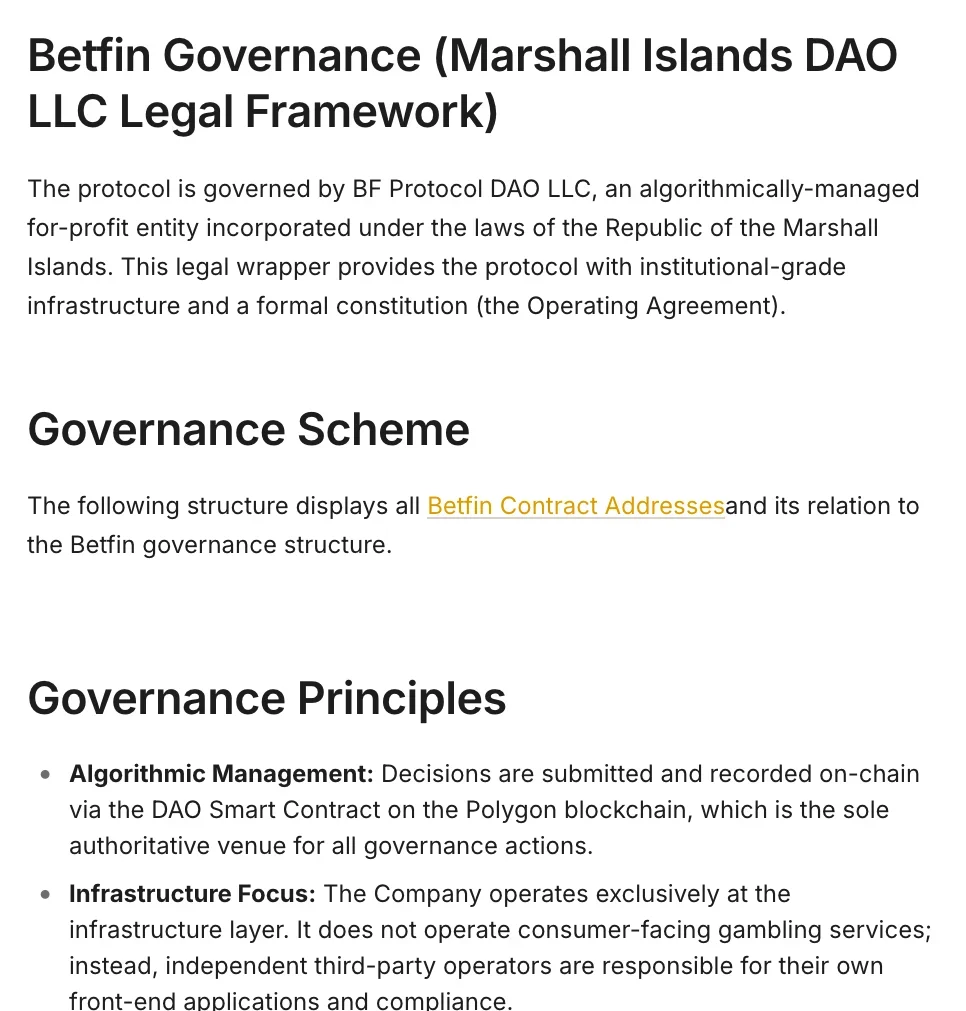
Betfin’s documents tell the same story from the other side. The protocol is governed by BF Protocol DAO LLC, a company incorporated in the Marshall Islands. The documents say the company works “exclusively at the infrastructure layer”, does not run consumer gambling, and that “independent third-party operators” are responsible for their own front ends and compliance. They do not claim a gambling licence. Czech investigators found no permit from the Ministry of Finance.
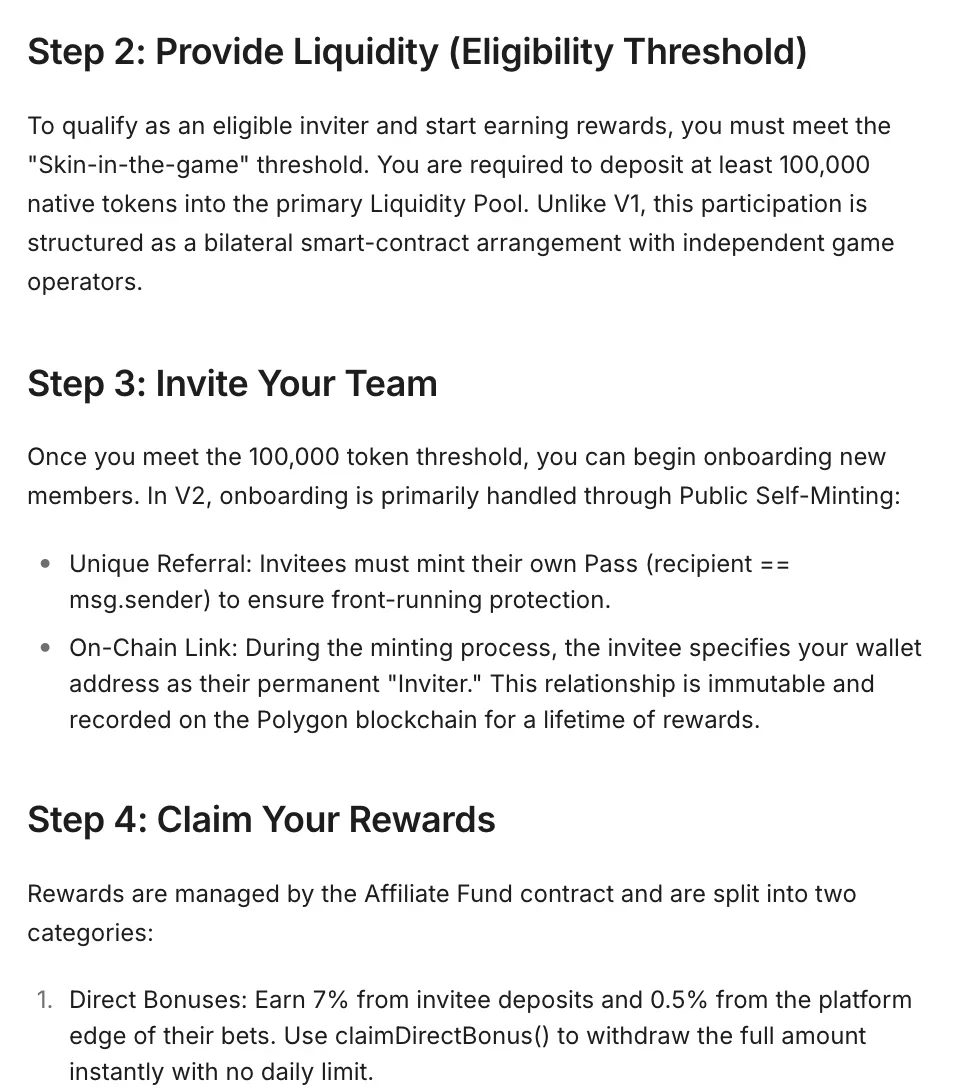
The affiliate manual shows where the growth was meant to come from. To invite others and earn rewards, a member had to deposit at least 100,000 BET into the main liquidity pool. Inviters earned 7% of their invitees’ deposits and 0.5% of the house edge on their bets, plus bonuses from a wider referral tree. Seznam Zprávy reports that BET was sold through network-marketing schemes and offered to the public as an investment.
The investigators’ account of the money is harsher. According to Šimůnek, Betfin overstated the number of active players on purpose, and a large share of the player accounts were made by automated programs. “In this way an apparent casino profit was created, which was then redistributed to investors,” he said. He added that investors were steered to buy BET outside the exchanges, so money could be taken without moving the market price. Influencers promoted the project, and its people appeared in duck masks and drove cars wrapped in a duck design. They called themselves “duck nation”.
One briefing figure does not match the chain. Šimůnek said the developers issued the token “in practically unlimited quantity, 7.8 billion pieces”. The BET contract on Polygon shows a fixed supply of 777,777,777,777 tokens, and the payout pool alone held 35 billion in October. Customs also compared a declared value of more than CZK 45 billion for all tokens in circulation with real exchange liquidity of about CZK 11 million, roughly $0.5 million. They have not published how they reached the first number.
15 October: the raid, and the casino goes quiet
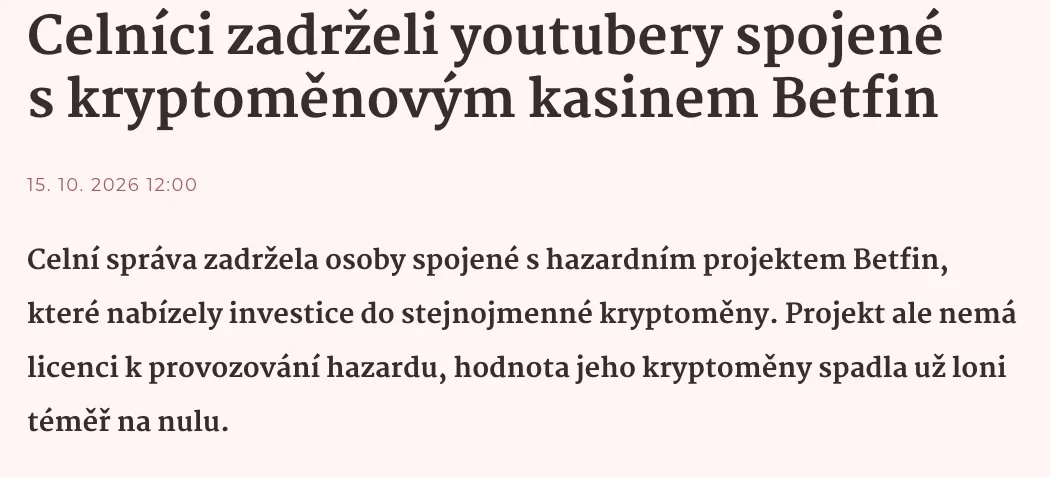
The release says only “in October”. The first public report came on Thursday 15 October, when Seznam Zprávy wrote that customs had carried out a raid in Brno and the surrounding area and detained several people, including YouTubers who had promoted Betfin. A customs spokesperson confirmed that criminal proceedings were under way and gave no detail. The report already said the project had no licence to run gambling in the country.
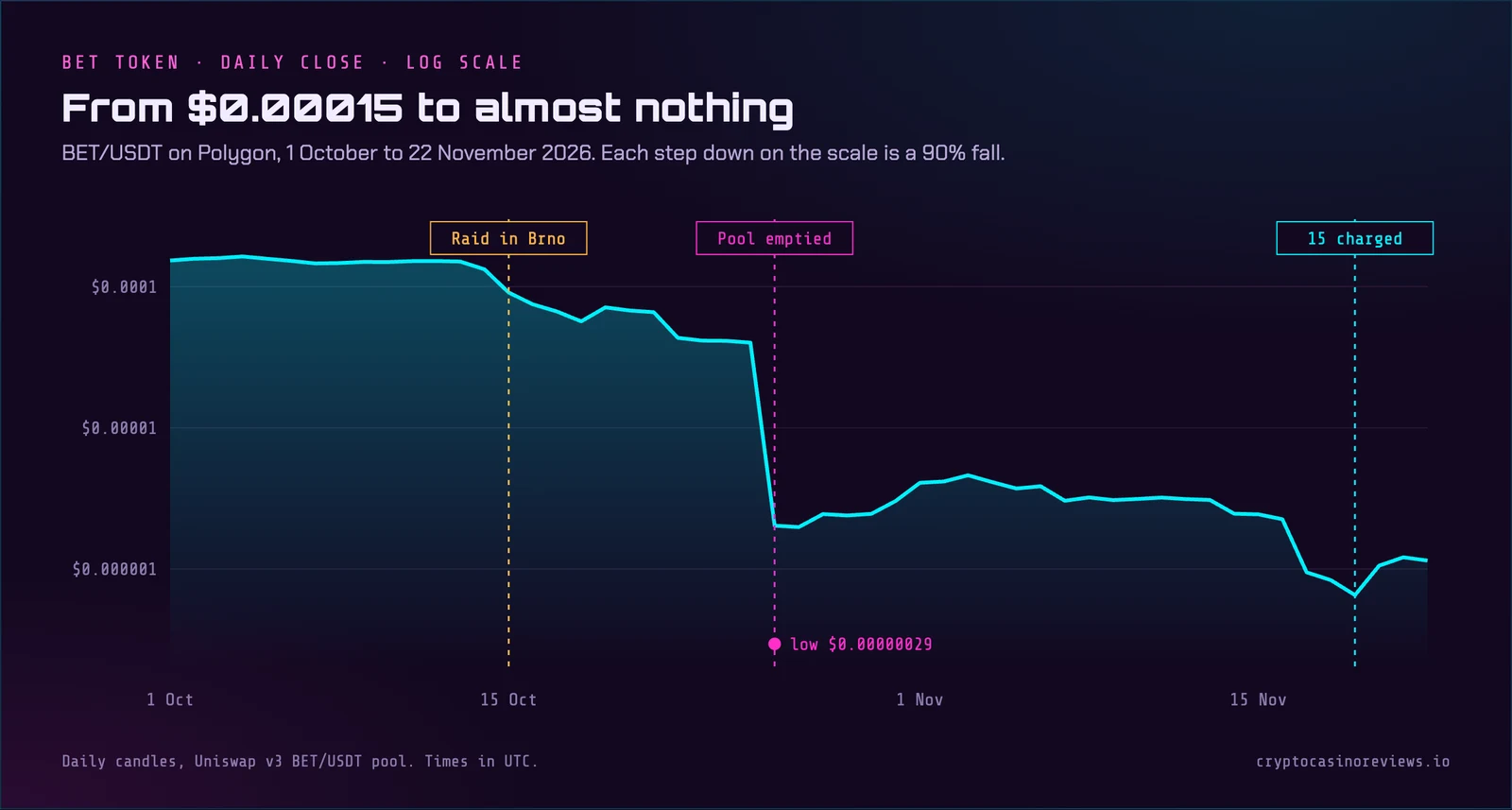
The token reacted first. BET had traded near $0.00015 for most of early October, already about 95% below its February 2025 peak of $0.0029. It closed 15 October at $0.000091, about 40% lower. On-chain analysts at Bitquery found that the game contract kept taking bets that day and then almost stopped at 12:50 UTC on 16 October, 14:50 in Prague. In the 50 minutes before, it made 762 payouts. In the hour after, it made 48.
25 October, 23:58 UTC: 39 seconds on the ledger
Betfin’s payout pool held the BET that the casino paid out. It was an upgradeable contract: an admin can replace the code it runs while the address and the tokens stay the same. Developers use this to fix bugs. It also means the admin can change what the contract does with the money inside.
I read the pool’s storage and transfer records on Polygon block by block. The code changed in block 96178235 at 23:58:44 UTC. At 23:59:17 the pool sent 34,989,778,623.81 BET to a fresh wallet. The original code returned at 23:59:23. Three minutes later the same admin wallet sent the new wallet 30 POL to pay its network fees. The first sale followed at 00:06:09 UTC on 26 October.
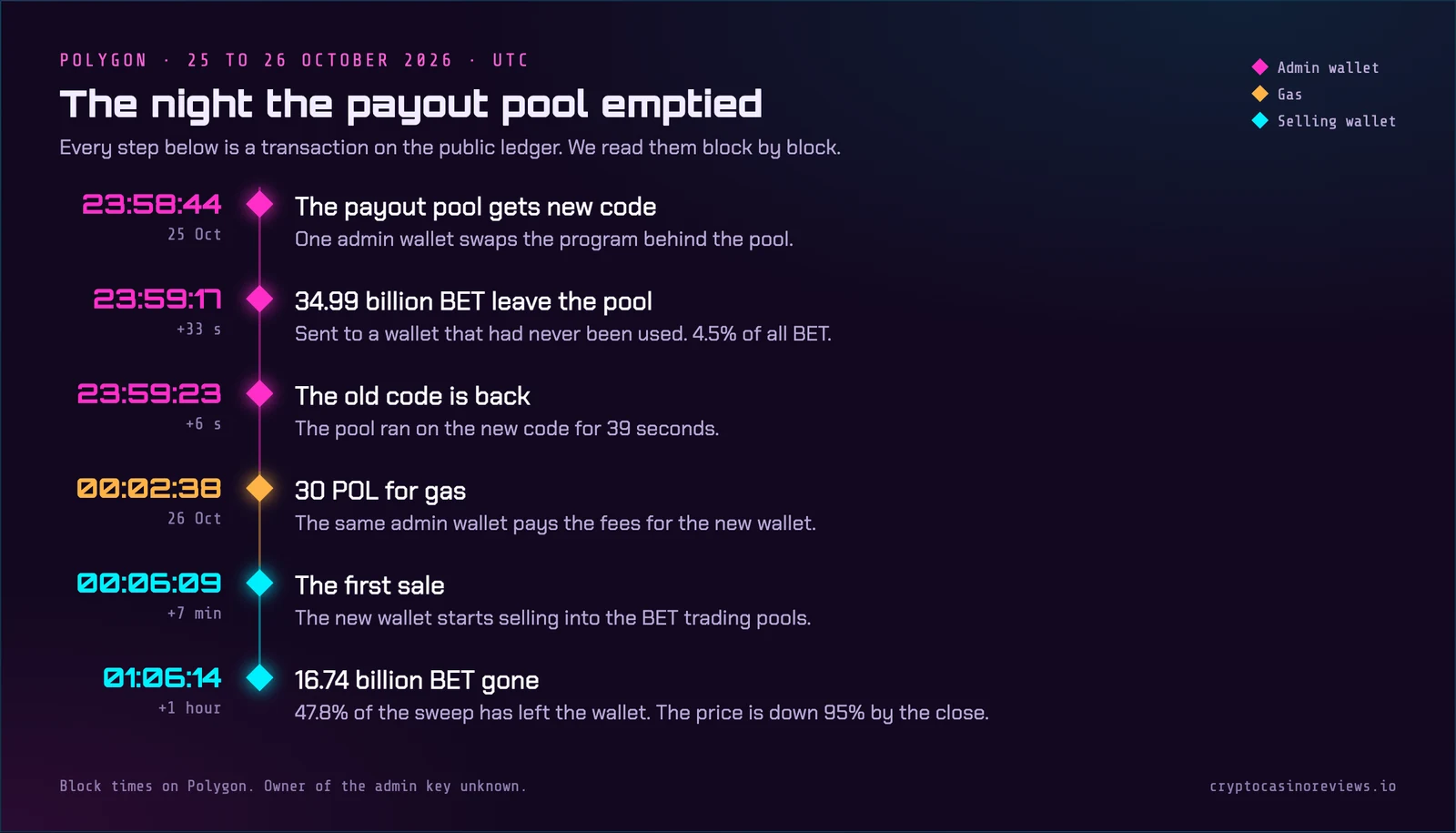
Over the next hour the new wallet moved 16.74 billion BET into trading, 47.8% of what it received. The last large transfer left at 01:06:14 UTC. Bitquery puts the proceeds of that hour at about $62,000 and traces them across bridges to Solana and then BNB Chain the same night. The wallet still holds 17.52 billion BET. The admin wallet has not sent a single transaction since that night. We followed hot wallets the same way when Gamdom went offline in October.
Who held the key
Betfin’s governance page lists two safeguards: a multisig wallet where three of five named signers must approve an action, and a timelock that delays changes by at least one day. I asked the payout pool contract which addresses held its top admin role. Before the sweep the answer was one wallet, the one that ran the sweep. The multisig did not hold the role. The timelock did not hold it either. The admin wallet is not one of the five published signers. It still holds the role today.
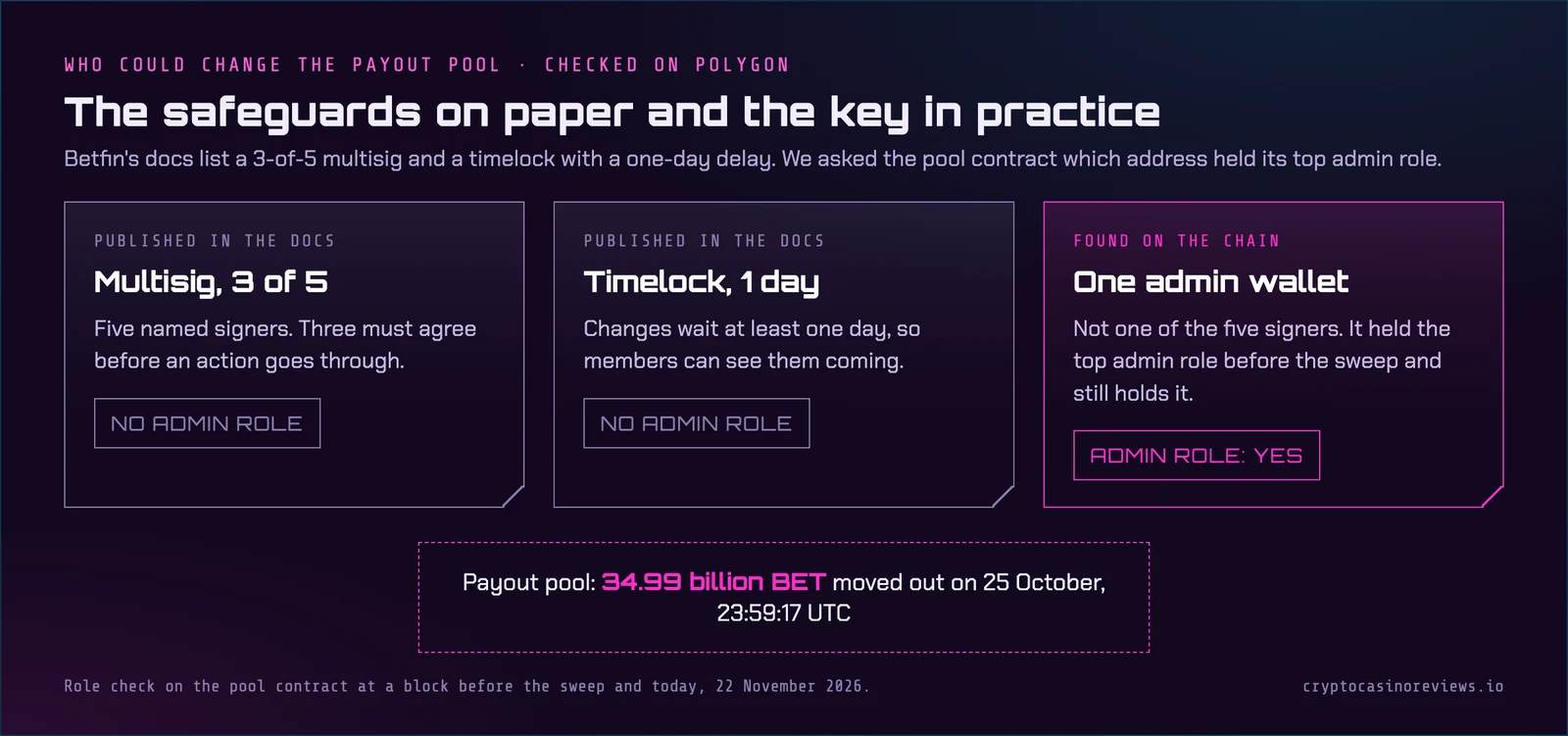
Bitquery found that this admin wallet received its first funds in late March 2026 from the wallet that launched BET in 2024, and created Betfin’s new game contract and payout pool the next day. The ledger shows what a key did. It does not show whose hand was on it. We do not know whether the key holder is one of the people charged, or why the sweep came ten days after the raid. Police have not commented on it.
What BET holders were left with
BET closed 25 October at $0.000040. On 26 October it touched $0.00000029 and closed at $0.0000020, down 95% in a day. At the pre-sweep price, the 35 billion tokens were worth about $1.4 million on paper. Selling into thin pools raised far less: about $62,000 in the first hour, by Bitquery’s count. By 22 November BET traded at about $0.0000012, with a few hundred dollars of volume a day.
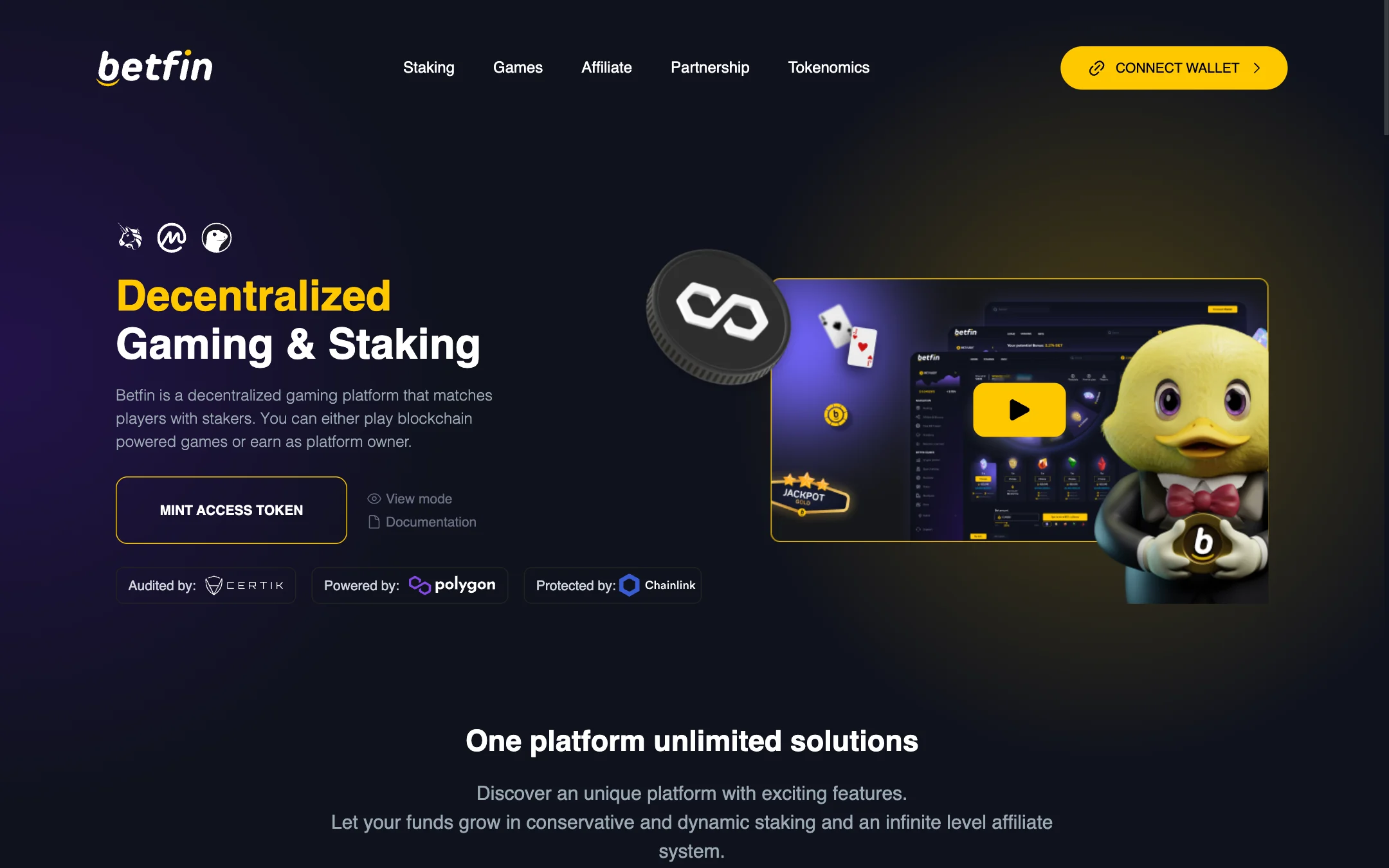
In an archived copy from March 2025 the same homepage sold “Decentralized Gaming & Staking”, with a duck mascot and a games menu. It told visitors to “stake your tokens and become a casino owner” and said Betfin was “not accessible without invitation”.
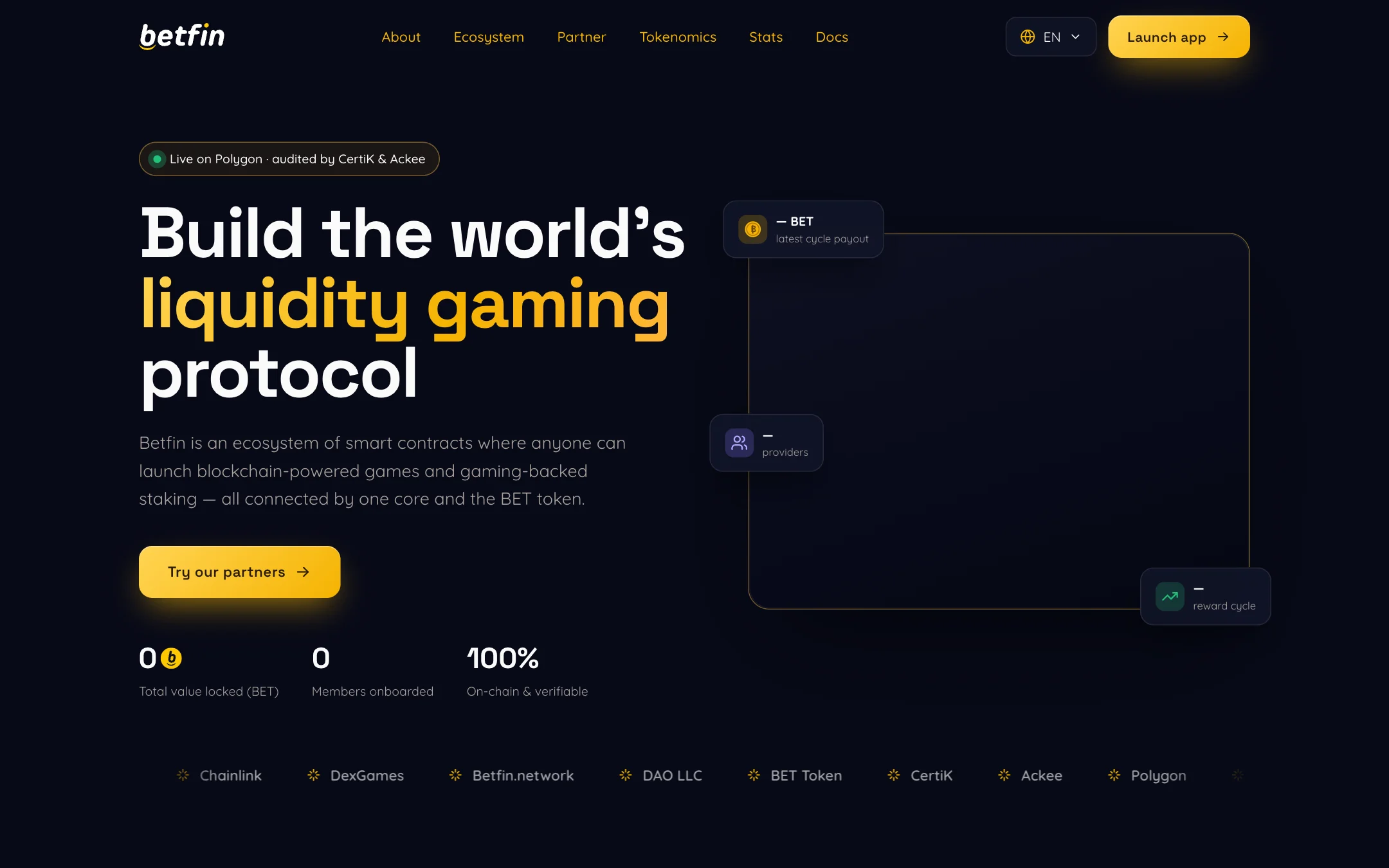
The site is still up. On 22 November the betfin.io homepage showed 0 BET in total value locked and 0 members onboarded. The same page says “Live on Polygon” and “audited by CertiK & Ackee”, and promises that every stake, bet and payout is “independently verifiable”. We did not check those audits. A code audit covers what a contract does. Who holds its admin role is a separate question, and here that role sat with one wallet.
The games lobby still runs
The games site shows a different picture. On 22 November the dexgames.io lobby listed Roulette, Multiplayer Roulette, Lucky Round and Stones as “Active”, with 36.59 billion BET under “Total staked”. I checked where that number comes from. The lobby reads it from the payout pool that was emptied on 25 October. The function it calls adds up every deposit ever made and does not go down when money leaves. On the ledger the pool holds 888 million BET, about 2.4% of the figure on screen.
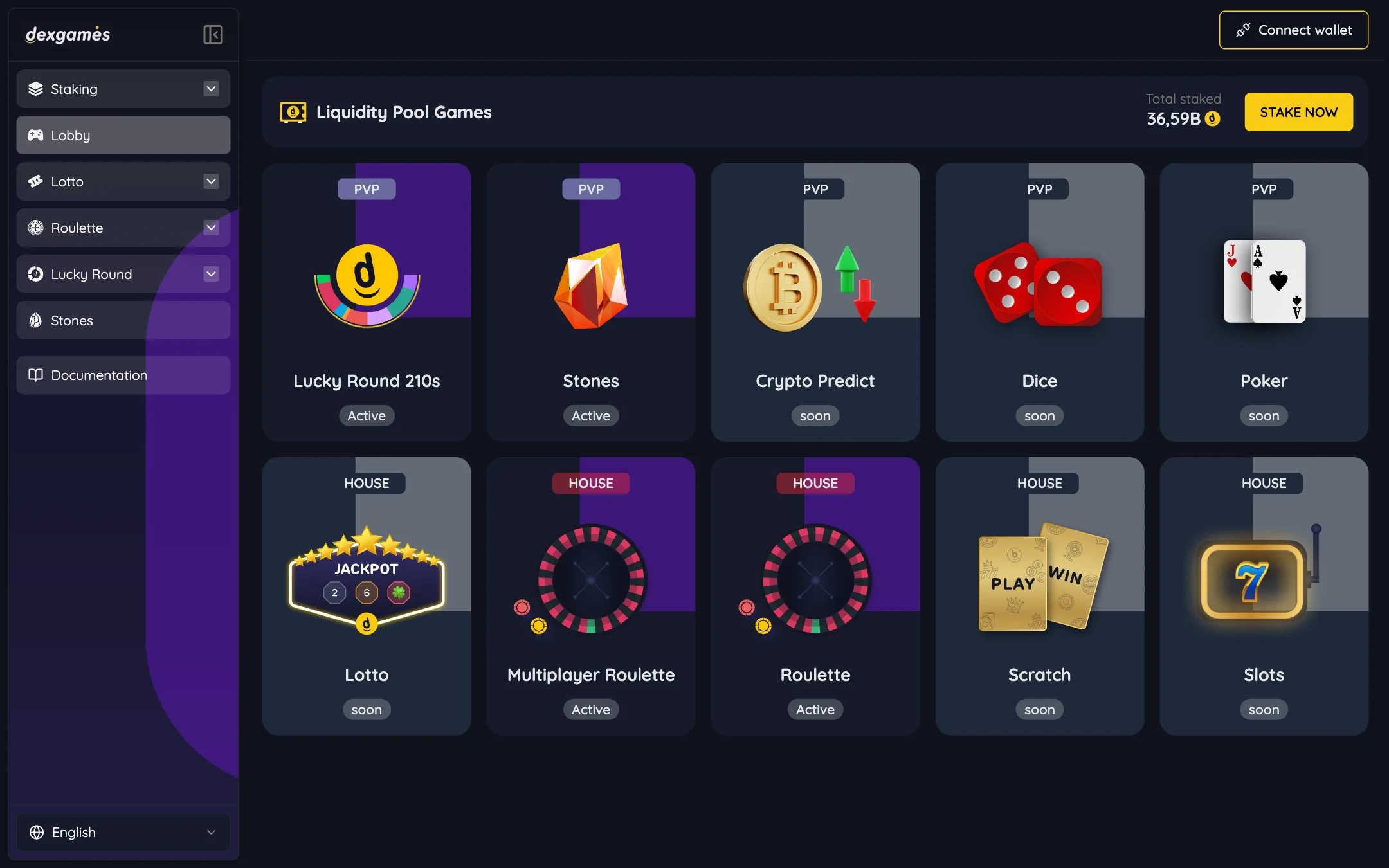
The pool did not stay empty. Right after the sweep its balance was zero. On 26 October, 14 wallets staked 406 million BET into it through the site’s deposit contract. Deposits since the sweep add up to 859 million BET, worth about $1,000 at today’s price. The pool still sends out small payments. In two and a half hours on 22 November it made four. I did not place a bet, so I cannot say whether the games pay out as the lobby suggests.
Timeline
| Date (UTC) | Source | What happened |
|---|---|---|
| February 2024 | Bitquery | The BET token is launched on Polygon. |
| 20 February 2025 | Market data | BET peaks at $0.0029. |
| August 2025 | Czech customs, via ČTK | Customs start looking at Betfin and soon work with police. |
| Late March 2026 | Bitquery | The admin wallet is funded and creates a new game contract and payout pool. |
| 15 October 2026 | Seznam Zprávy | Raid in Brno and the surrounding area. BET closes about 40% lower. |
| 16 October, 12:50 | Bitquery | Payouts from the game contract almost stop. |
| 25 October, 23:58:44 | Polygon, our check | The payout pool’s code is swapped. |
| 25 October, 23:59:17 | Polygon, our check | 34.99 billion BET leave the pool. The old code returns six seconds later. |
| 26 October, 00:06:09 | Polygon, our check | Selling starts. BET closes the day 95% lower. |
| 26 October | Polygon, our check | 14 wallets stake 406 million BET into the emptied pool. |
| 19 November 2026 | Customs and police | 15 people charged, three in custody. Press conference near Prague. |
| 22 November 2026 | betfin.io, our check | betfin.io shows 0 BET locked. The games lobby lists roulette as active and shows 36.59 billion BET staked. The pool holds 888 million. |
Before you play at a casino that runs on smart contracts
Betfin is one case, and the court has not ruled. The checks below come from what went wrong for its token holders, and they apply to any casino that puts your money in a contract. If you would rather start with houses we have already checked, see our reviews of crypto casinos.
- Look for a licence you can check. A licence has a number and a company name that match a regulator’s register. Betfin called itself decentralised and showed neither. Our Anjouan licence guide shows how a register check works, and our page on crypto casino owners lists the companies and people behind the casinos we review.
- Find out who can change the contract. If the pool that pays you is upgradeable, someone holds the admin key. Ask which address it is. If the published multisig or timelock does not hold the role, it does not protect the money.
- Treat a casino token as a risk of its own. If you must buy the house token to play or to earn, your balance moves with its price. BET lost 95% in one day.
- Be careful when the pitch is about recruiting. A deposit threshold to unlock referral rewards, a percentage of your invitees’ deposits and a reward tree are the signs of network marketing. Customs say many of Betfin’s players were bots.
- Know what a fairness check covers. A provably fair check proves that a round was not changed after you bet. It says nothing about who can empty the contract that pays out. Our fairness tracker lists the audits and faults we have found at the casinos we review.
Alex Jovanovic: “Betfin’s site still says every payout is independently verifiable. That part is true. It is how I could follow 35 billion tokens out of the pool in 39 seconds. Being able to see the transfer did nothing for the people whose money sat in that pool.”
What is still not known
- Who the 15 people charged are, and who the three in custody are. Police have not named them.
- Who controlled the admin wallet on 25 October, and whether that person had been detained.
- Whether the 35 billion BET in the pool belonged to players, to stakers or to the house. Betfin has said nothing in public.
- How much investors lost. Police say that will depend on further investigation.
- Who keeps the games site running after the charges, and whether anyone who staked after the sweep can withdraw.
- Where the “7.8 billion” token figure from the press conference comes from. It does not match the supply on the chain.
Alex’s verdict
The criminal case is about a missing licence and an organised group, and a Czech court will decide it. The on-chain part is already on the record. Betfin told its members that a multisig and a timelock guarded the protocol, and the pool that paid them answered to one wallet. Ten days after the raid that wallet used its power. If a casino asks you to trust its code, ask who can change that code first. If nobody can answer, keep your money out.
How we checked: on 22 November 2026 we read the joint release of the Czech police and customs of 19 November in the original Czech, Seznam Zprávy’s reports of 15 October and 19 November, ČTK’s report of the press conference and Bitquery’s investigation of 21 November. We read Betfin’s governance, affiliate and games documents and opened betfin.io and dexgames.io. Archived copies of Betfin’s old game pages in the Internet Archive load without their content, so the game list comes from Betfin’s documents and the live lobby. We checked the token supply, the code swap, the sweep, the gas transfer, the sales in the first hour, the wallet balances, the admin roles, the pool’s deposit counter and the deposits after the sweep on the Polygon ledger through public nodes. Prices come from daily candles of the main BET/USDT pool. Currency conversions use the rate of 19 November 2026. We took the screenshots and made the charts on 22 November. Our review method explains how we check licences and owners.
FAQ
What is Betfin?
Betfin is a crypto gambling project on the Polygon blockchain with its own token, BET. Players bought BET to play games such as roulette. Members could also stake BET as “investors” and earn referral rewards. Its documents name BF Protocol DAO LLC, a Marshall Islands company, and do not claim a gambling licence.
Who has been charged in the Betfin case?
Czech police have charged 15 people on suspicion of taking part in an organised criminal group and running games of chance without a licence. Three alleged organisers are in custody. Police have not named anyone, and nobody has been convicted.
Did Betfin players lose CZK 267 million?
No such finding exists. CZK 267 million, about $12 million, is the group’s unlawful gain as calculated so far by investigators. The police see the state as the injured party and say losses to investors will depend on further investigation. BET holders lost about 99% of the token’s value between mid-October and late November.
Who emptied Betfin’s payout pool?
One admin wallet. It held the top admin role on the pool, swapped the pool’s code for 39 seconds on 25 October 2026 and moved 34.99 billion BET to a new wallet. The ledger does not show who controlled that wallet, and police have not commented on the sweep.
Can I still use Betfin or get my BET back?
betfin.io showed 0 BET locked on 22 November 2026. The games site dexgames.io still lists roulette as active and shows 36.59 billion BET staked, but the pool behind it holds 888 million. Bitquery found that the game contract has taken almost no bets since 16 October. The wallet that emptied the pool still holds its admin role. We would not send any money to it. If you think you are a victim, the case is supervised by the High Public Prosecutor’s Office in Olomouc.
Is a decentralised casino legal?
Running it on a blockchain does not change the gambling law of the country where players live. In the Czech Republic, games of chance need a permit from the Ministry of Finance. As the deputy head of NCOZ put it, using blockchain is not illegal, using it outside the law is.
Gambling is for adults only and can become addictive. A casino token can lose most of its value in a day. Play only with money you can afford to lose, and read our responsible gambling guide if it stops being fun.

Written by
I write the house files on Crypto Casino Reviews. I have played at land casinos since 2004 and online since 2012, and I have worked in websites and SEO since 2016. I still play every desk I score.



Reader desk
Comments
Spotted a mistake or have a question about this story? Write it here. Alex reads every comment before it goes live.